
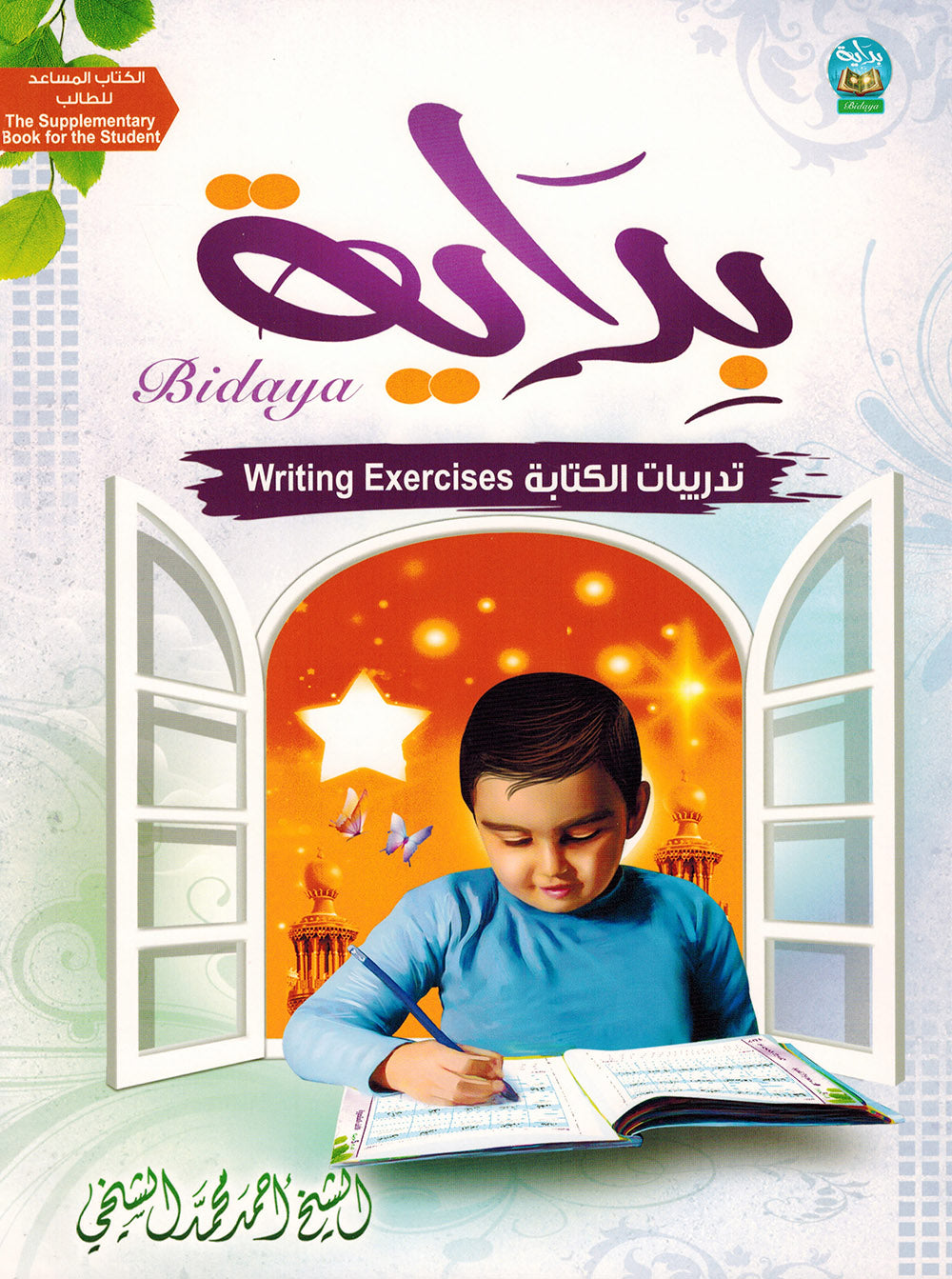
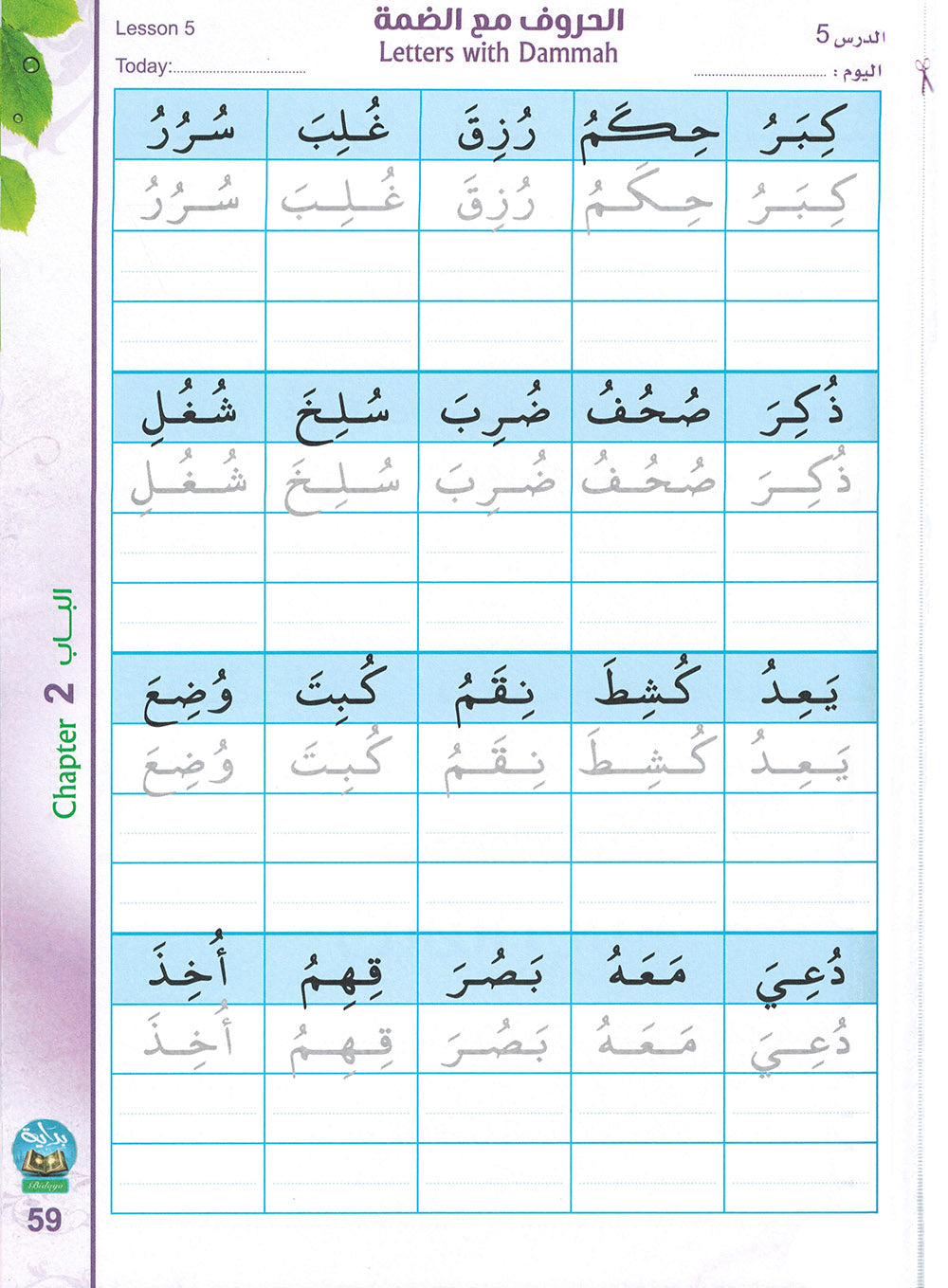
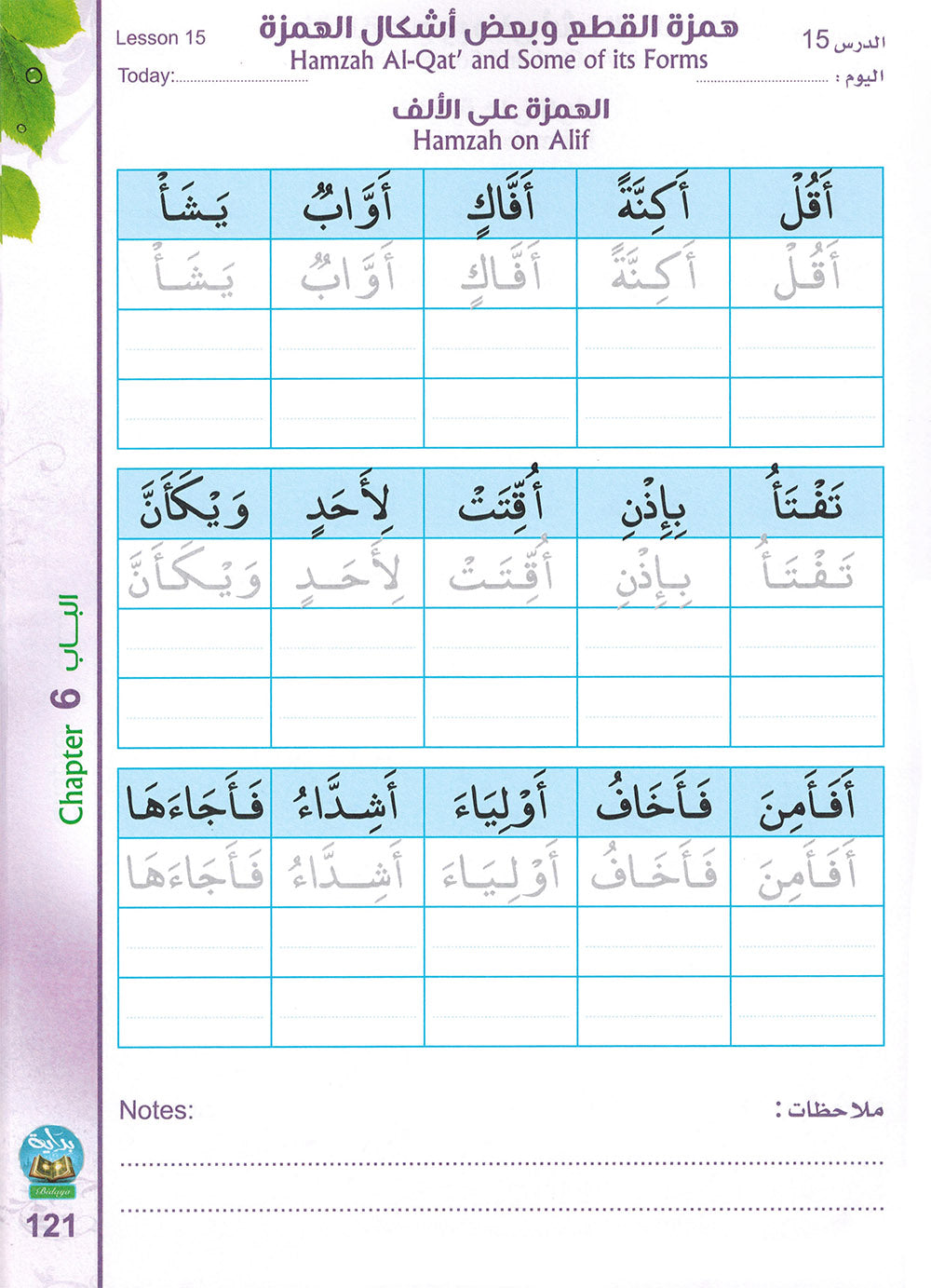
Bidaya Writing Exercises is the companion workbook to the Bidaya Textbook (Main Book), designed to reinforce and strengthen writing skills alongside Arabic reading and Qur’anic recitation. This book provides structured handwriting and writing practice that aligns exactly with the same 20 chapters covered in the main textbook.
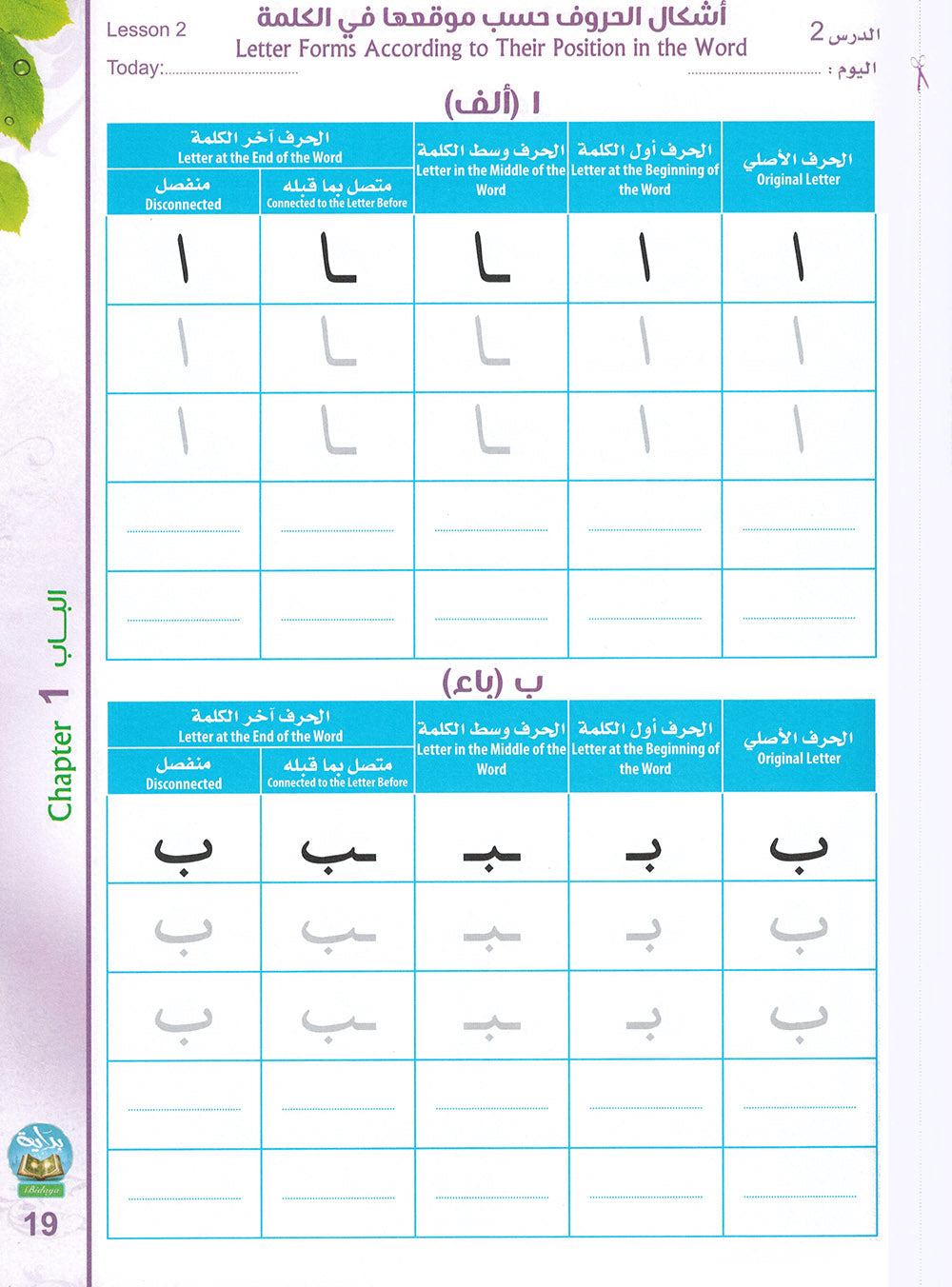
The writing exercises follow a clear, progressive approach that helps learners apply what they learn in each lesson through guided practice. Students practice writing Arabic letters, letter forms, words, and Qur’anic expressions step by step, building accuracy, confidence, and familiarity with the Uthmani Qur’anic script. The activities are suitable for learners of all ages (4+) and are ideal for classroom use, homeschooling, or independent study.
Each chapter includes targeted writing tasks that:
-
Reinforce correct letter shapes and connections
-
Strengthen recognition of short and long vowels
-
Develop accuracy in writing Qur’anic words
-
Support mastery of essential Tajweed-related concepts through written application
The book is carefully designed to complement the instructional flow of the Bidaya Textbook, making it easy for teachers and parents to integrate reading and writing practice seamlessly.
General Notes in the Book:
• The words in the book were selected through combining lesson scenarios and reviewing previous lessons related to the same word.
• Sukun: The Sukun in the Uthmani script of the Quran (ۡس) differs in its shape from the Sukun in the modern Arabic script (ْس).
• Tanwin: The placement of Tanwin Fathah in the Quranic script (بًا) is on the letter preceding the Alif, whereas in the modern Arabic script, it is placed on the Alif (باً).
• Small Alif (or small dagger Alif): The Small Alif is specific to the Quranic script (كِتٰب) and is not found in modern Arabic spelling (كِتاب).
• Kasrah with Shaddah: The position of the Kasrah with a Shaddah differs depending on the Quranic script (تِّ، نِّ). (The Kasrah with a Shaddah is either positioned under the Shaddah but on top of the letter, or it is placed under the letter while the Shaddah remains on top.)
• The Madd Yā: No dots are placed under the Madd Yā (المدّية) if it occurs at the end of the word in the Quranic script (رُوحِى), whereas in modern Arabic spelling, it is drawn with two dots underneath (رٌوحِيَ).
Together with the Bidaya Textbook, Bidaya Writing Exercises provides a complete, systematic program that develops strong reading and writing skills while preserving the authenticity of Qur’anic orthography.
بداية تدريبات الكتابة
هو الكتاب المرافق لـ كتاب بداية (الكتاب الأساسي)، وقد صُمّم لتعزيز مهارات الكتابة إلى جانب تعلّم القراءة العربية والتلاوة الصحيحة للقرآن الكريم. يوفّر هذا الكتاب تدريبات كتابية منظّمة تتوافق تمامًا مع نفس الفصول العشرين الواردة في الكتاب الأساسي.
تعتمد تمارين الكتابة على منهج تدريجي واضح، يهدف إلى مساعدة المتعلّم على تطبيق ما يتعلّمه في كل درس من خلال أنشطة كتابية موجّهة. ويتدرّب الطلاب على كتابة الحروف العربية، وأشكالها المختلفة، والكلمات، والتراكيب القرآنية خطوة بخطوة، مما يعزّز الدقة، والثقة، والإلمام بالرسم العثماني للقرآن الكريم. وتناسب هذه التمارين جميع الفئات العمرية (4 سنوات فما فوق)، وهي مثالية للاستخدام في الصفوف الدراسية، أو التعليم المنزلي، أو التعلّم الفردي.
يحتوي كل فصل على أنشطة كتابية مركّزة تهدف إلى:
-
ترسيخ كتابة الحروف الصحيحة وأشكال الاتصال بينها
-
تعزيز التمييز بين الحركات القصيرة والطويلة
-
تنمية الدقة في كتابة الكلمات القرآنية
-
دعم إتقان المفاهيم الأساسية المرتبطة بالتجويد من خلال التطبيق الكتابي
وقد تم إعداد الكتاب بعناية ليكمّل تسلسل الشرح في كتاب بداية (الكتاب الأساسي)، مما يسهّل على المعلّمين وأولياء الأمور الدمج بين تدريبات القراءة والكتابة بسلاسة.
ملاحظات عامة في الكتاب:
• تم اختيار الكلمات في هذا الكتاب من خلال الجمع بين سيناريوهات الدروس ومراجعة الدروس السابقة المرتبطة بالكلمة نفسها.
• السكون: يختلف شكل السكون في الرسم العثماني للقرآن الكريم (ۡس) عن شكله في الكتابة العربية الحديثة (ْس).
• التنوين: يوضع تنوين الفتح في الرسم القرآني (بًا) على الحرف الذي يسبق الألف، بينما يوضع في الكتابة العربية الحديثة على الألف نفسها (باً).
• الألف الصغيرة (أو الألف الخنجرية): تختص الألف الصغيرة بالرسم القرآني (كِتٰب)، ولا تُستخدم في الإملاء العربي الحديث (كِتاب).
• الكسرة مع الشدة: يختلف موضع الكسرة مع الشدة بحسب الرسم القرآني (تِّ، نِّ)، حيث قد توضع الكسرة أسفل الشدة وفوق الحرف، أو أسفل الحرف مع بقاء الشدة فوقه.
• الياء المدّية: لا توضع نقطتان تحت الياء المدّية إذا جاءت في آخر الكلمة في الرسم القرآني (رُوحِى)، بينما تُكتب في الإملاء العربي الحديث بنقطتين تحتها (رُوحِيَ).
وبالاقتران مع كتاب بداية (الكتاب الأساسي)، يقدّم تمارين الكتابة – بداية برنامجًا متكاملًا ومنهجيًا يساعد المتعلّمين على إتقان مهارات القراءة والكتابة، مع الحفاظ على أصالة الرسم القرآني ودقته.


