

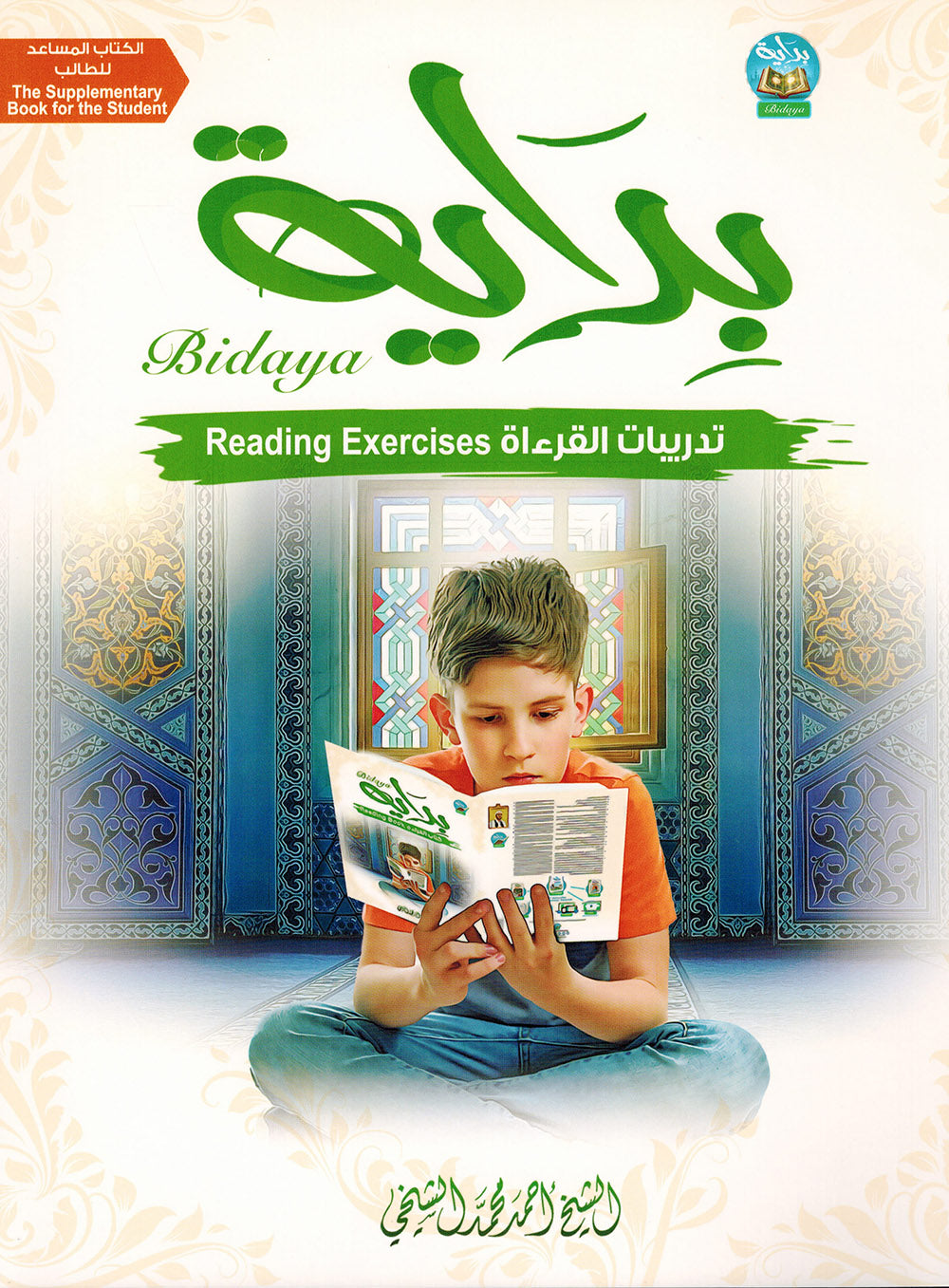
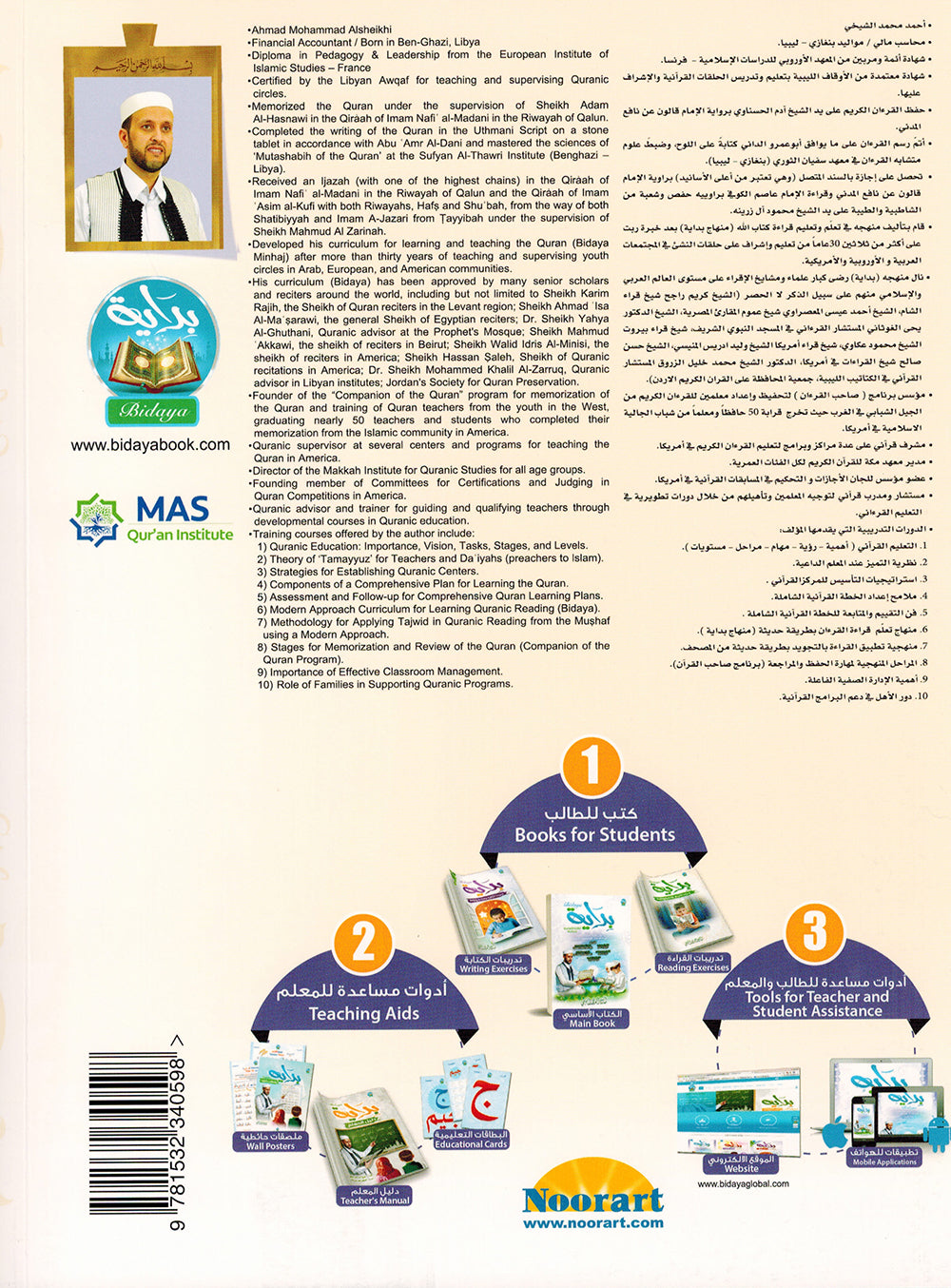
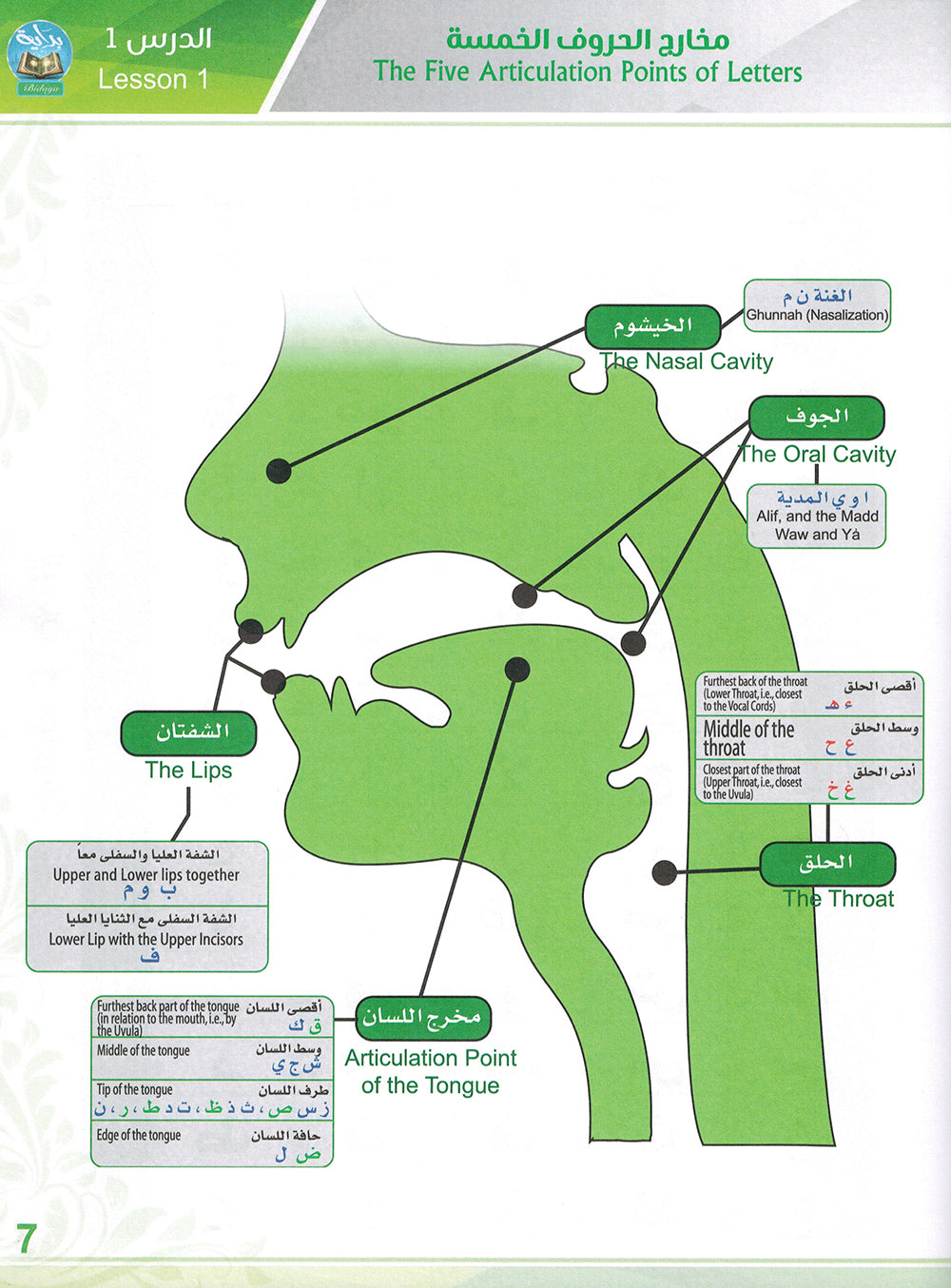
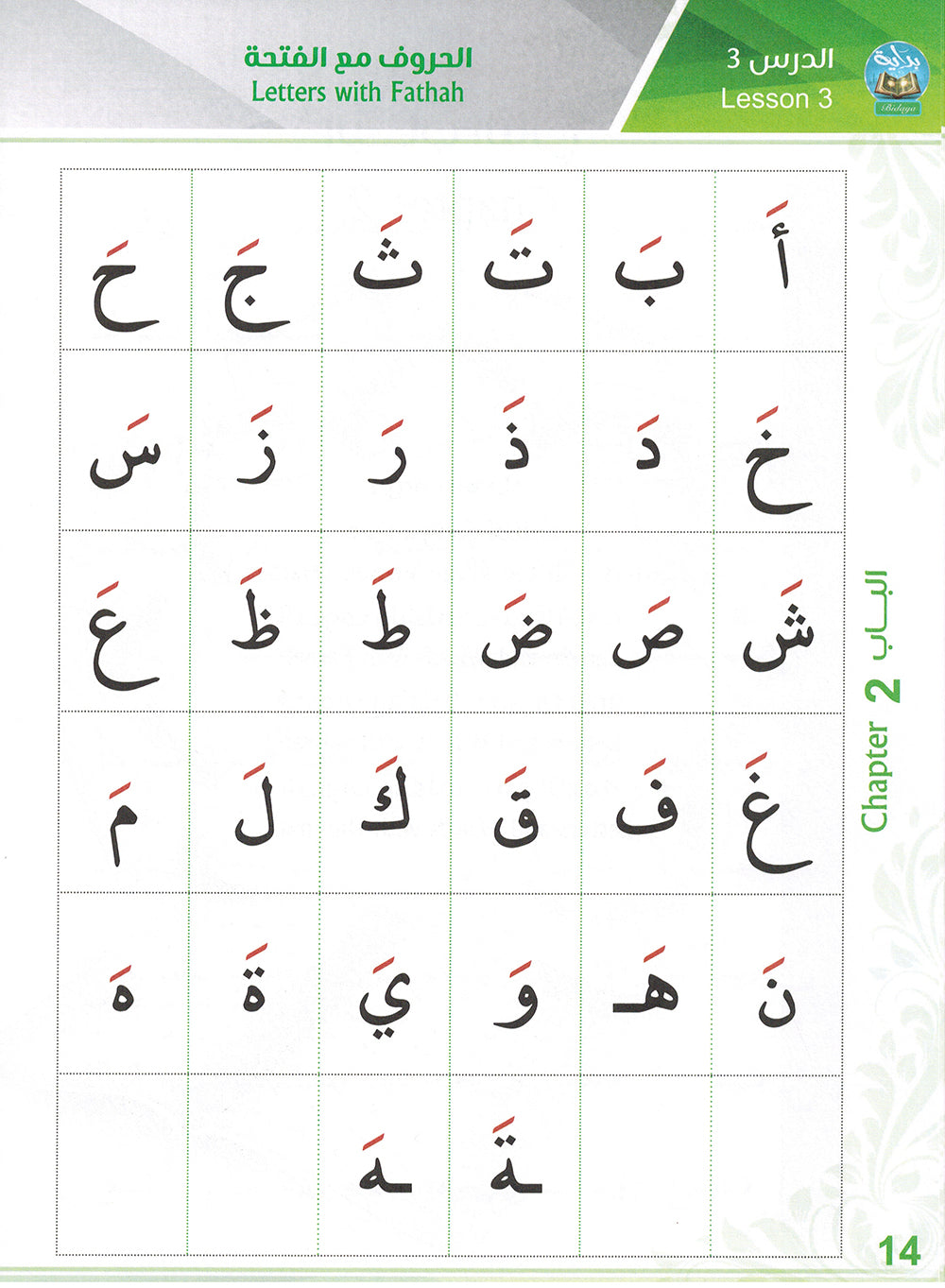
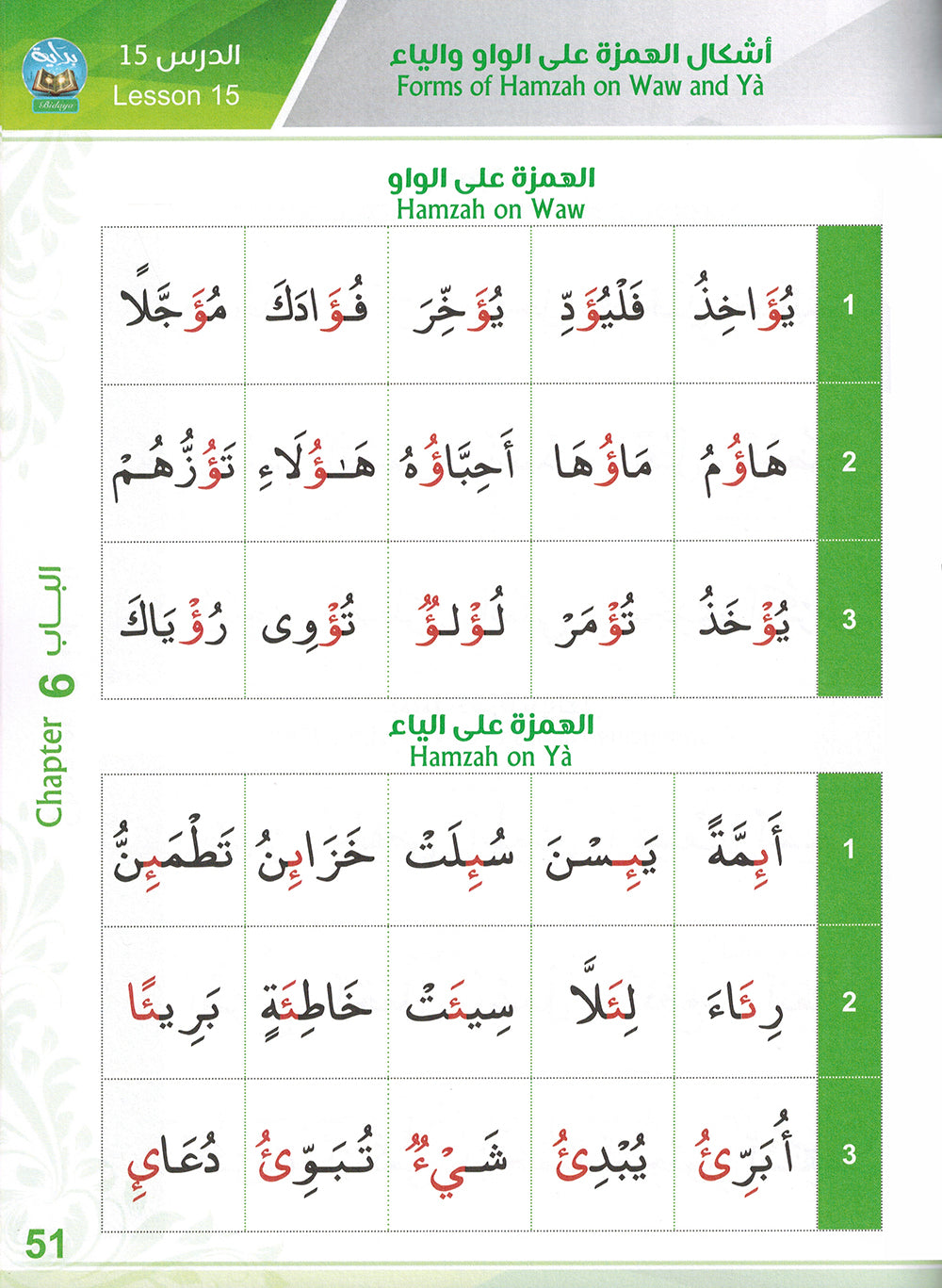
Bidaya Reading Activity is the companion reading book to the Bidaya Textbook (Main Book), specifically designed to strengthen reading fluency and reinforce accurate Qur’anic pronunciation. It follows the same 20 structured lessons as the main textbook, ensuring perfect alignment between instruction and practice.
Each lesson in the Bidaya Reading Activity features more than 50 additional practice words, carefully selected to cover all word forms, grammatical patterns, and reading cases introduced in that lesson. This allows students to apply what they have learned using the maximum possible range of examples, leading to deeper understanding and stronger retention.
All practice words are drawn from or modeled on Qur’anic Arabic, enabling learners to build confidence in reading authentic Qur’anic text while steadily improving accuracy, fluency, and consistency. The progressive design makes this book suitable for all learners ages 4 and above, whether used in classrooms, Sunday schools, homeschooling, or individual study.
Bidaya Reading Activity helps learners to:
-
Practice each lesson with extensive, focused reading examples
-
Recognize and apply vowel patterns, letter connections, and pronunciation rules
-
Strengthen fluency through repetition and variation
-
Master different word cases and grammatical situations systematically
When used alongside the Bidaya Textbook and Bidaya Writing Exercises, this reading activity book completes a well-rounded learning system that guides students step by step toward confident Arabic reading and precise Qur’anic recitation.
General Notes in the Book:
• The words in the book were selected through combining lesson scenarios and reviewing previous lessons related to the same word.
• Sukun: The Sukun in the Uthmani script of the Quran (ۡس) differs in its shape from the Sukun in the modern Arabic script (ْس).
• Tanwin: The placement of Tanwin Fathah in the Quranic script (بًا) is on the letter preceding the Alif, whereas in the modern Arabic script, it is placed on the Alif (باً).
• Small Alif (or small dagger Alif): The Small Alif is specific to the Quranic script (كِتٰب) and is not found in modern Arabic spelling (كِتاب).
• Kasrah with Shaddah: The position of the Kasrah with a Shaddah differs depending on the Quranic script (تِّ، نِّ). (The Kasrah with a Shaddah is either positioned under the Shaddah but on top of the letter, or it is placed under the letter while the Shaddah remains on top.)
• The Madd Yā: No dots are placed under the Madd Yā (المدّية) if it occurs at the end of the word in the Quranic script (رُوحِى), whereas in modern Arabic spelling, it is drawn with two dots underneath (رٌوحِيَ).
Together with the Bidaya Textbook, Bidaya Writing Exercises provides a complete, systematic program that develops strong reading and writing skills while preserving the authenticity of Qur’anic orthography.
بداية تدريبات القراءة
هو كتاب مرافق لكتاب بداية كتاب الطالب ، صُمّم خصيصًا لتعزيز مهارات القراءة وتقوية الطلاقة في النطق الصحيح للقرآن الكريم. ويتبع الكتاب نفس الدروس العشرين المنظمة الموجودة في الكتاب الأساسي، مما يضمن توافقًا تامًا بين الشرح والتطبيق.
يضم كل درس في كتاب أنشطة القراءة أكثر من 50 كلمة إضافية للتدريب، تم اختيارها بعناية لتغطي جميع صيغ الكلمات والحالات النحوية وأوضاع القراءة الخاصة بكل درس. يتيح ذلك للطالب تطبيق ما تعلّمه من خلال أكبر عدد ممكن من الأمثلة، مما يعزز الفهم العميق ويقوّي ثبات المعلومة.
جميع كلمات التدريب مستمدة من اللغة القرآنية أو مصاغة على نمطها، مما يساعد المتعلم على اكتساب الثقة في قراءة النص القرآني الأصيل مع تحسين الدقة والطلاقة والاستمرارية في الأداء. ويتميز الكتاب بتدرج مناسب يجعله ملائمًا لجميع الأعمار ابتداءً من 4 سنوات فما فوق، سواء في الفصول الدراسية، أو مدارس نهاية الأسبوع، أو التعليم المنزلي، أو الدراسة الفردية.
يساعد كتاب أنشطة القراءة – بداية المتعلمين على:
-
التدرب على كل درس من خلال عدد كبير من أمثلة القراءة المركّزة
-
التعرف على أنماط الحركات واتصال الحروف وقواعد النطق وتطبيقها عمليًا
-
تنمية الطلاقة القرائية من خلال التكرار والتنوع
-
إتقان مختلف صيغ الكلمات والحالات النحوية بأسلوب منهجي متدرج
وعند استخدامه إلى جانب كتاب بداية الأساسي وكتاب تمارين الكتابة – بداية، يكتمل النظام التعليمي المتكامل الذي يوجّه الطالب خطوة بخطوة نحو قراءة عربية واثقة وتلاوة قرآنية دقيقة ومتقنة.
ملاحظات عامة في الكتاب:
• تم اختيار الكلمات في هذا الكتاب من خلال الجمع بين سيناريوهات الدروس ومراجعة الدروس السابقة المرتبطة بالكلمة نفسها.
• السكون: يختلف شكل السكون في الرسم العثماني للقرآن الكريم (ۡس) عن شكله في الكتابة العربية الحديثة (ْس).
• التنوين: يوضع تنوين الفتح في الرسم القرآني (بًا) على الحرف الذي يسبق الألف، بينما يوضع في الكتابة العربية الحديثة على الألف نفسها (باً).
• الألف الصغيرة (أو الألف الخنجرية): تختص الألف الصغيرة بالرسم القرآني (كِتٰب)، ولا تُستخدم في الإملاء العربي الحديث (كِتاب).
• الكسرة مع الشدة: يختلف موضع الكسرة مع الشدة بحسب الرسم القرآني (تِّ، نِّ)، حيث قد توضع الكسرة أسفل الشدة وفوق الحرف، أو أسفل الحرف مع بقاء الشدة فوقه.
• الياء المدّية: لا توضع نقطتان تحت الياء المدّية إذا جاءت في آخر الكلمة في الرسم القرآني (رُوحِى)، بينما تُكتب في الإملاء العربي الحديث بنقطتين تحتها (رُوحِيَ).
وبالاقتران مع كتاب بداية (الكتاب الأساسي)، يقدّم تمارين الكتابة – بداية برنامجًا متكاملًا ومنهجيًا يساعد المتعلّمين على إتقان مهارات القراءة والكتابة، مع الحفاظ على أصالة الرسم القرآني ودقته.


